Was ist Datenschutz im Internet und warum sollte Sie das interessieren?
Unsere Privatsphäre im Internet ist bedroht, aber wir können viel tun, um uns zu schützen


Teilen
Ein immer größerer Teil unseres Alltags spielt sich online ab und wird zunehmend durch einzelne Geräte wie Smartphones erleichtert. Was wir jedoch vielleicht nicht so leicht erkennen, sind die Wege, auf denen unsere persönliche und kollektive Privatsphäre direkt vor unserer Nase beeinträchtigt wird.
Es ist ganz natürlich zu erwarten, dass das, was wir online tun, privat bleiben sollte: Wenn wir im Internet surfen, eine E-Mail an einen geliebten Menschen senden oder Einkäufe tätigen – warum sollte sich das von einem Besuch in der Bibliothek, dem Versenden eines Briefes oder einem Einkauf im Geschäft unterscheiden?
Dieser Artikel erläutert das sich weiterentwickelnde Konzept der Privatsphäre im Internet, warum es wichtig ist und was die größten Bedrohungen für die Privatsphäre im Internet sind.
Was ist die Privatsphäre im Internet?
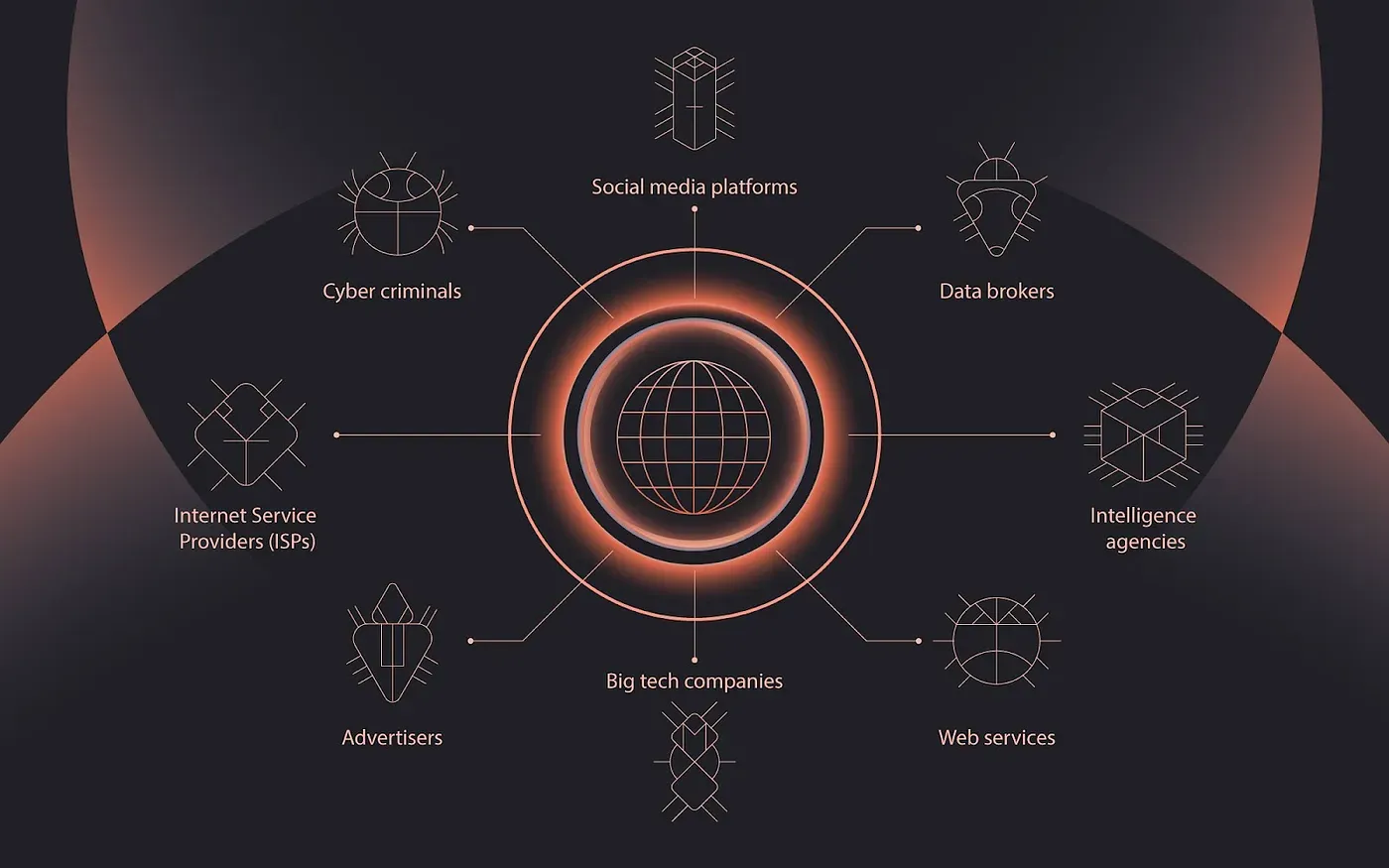
Datenschutz im Internet bezieht sich auf das Recht, über personenbezogene Daten, Online-Aktivitäten und Kommunikation zu bestimmen. Dabei geht es darum, Informationen vor Tracking, Überwachung und unbefugtem Zugriff durch Unternehmen, Regierungen, Internetdienstanbieter und Cyberkriminelle durch Verschlüsselung, Anonymisierungstools und sichere Surfpraktiken zu schützen.
Häufige Fragen zum Datenschutz im Internet
- Welche Arten von Informationen und Aktivitäten sollten als „privat“ angesehen werden, wenn sie im „öffentlichen“ Web übertragen werden oder dort stattfinden?
- Inwieweit ist ein Webunternehmen, an das wir personenbezogene Daten weitergeben, für den Schutz dieser von ihm gespeicherten Daten verantwortlich?
- Welche Arten von Informationen dürfen Webdienste an Dritte weitergeben, und welche Art der Weitergabe sollte ihnen untersagt sein?
Datenschutz im Internet: Maßnahmen der Gerichtsbarkeit
Der Datenschutz im Internet unterliegt gesetzlichen und gerichtlichen Definitionen. Zwar schützen viele Verfassungen die Privatsphäre des Einzelnen, doch fehlte es bei der Entstehung des Internets an einer Aufsicht über den Datenschutz im Internet, und dies ist nach wie vor ein Thema, das sich weiterentwickelt.
Regierungen erkennen mittlerweile den Datenschutz im Internet als Grundrecht an. In den letzten zehn Jahren hat der Datenschutz im Internet nach und nach an öffentlicher und rechtlicher Bedeutung gewonnen, sodass Regierungen aufgefordert sind, ihn als Grundrecht ihrer Bürger anzuerkennen und zu schützen. Jüngste Rechtsvorschriften wie die Datenschutz-Grundverordnung (DSGVO) in der Europäischen Union, die bislang strengste staatliche Datenschutzgesetzgebung, sind zweifellos ein wichtiger Schritt nach vorne.
Allerdings gilt die DSGVO regional, während das Internet global ist. Einige Regierungen überwachen ihre Bürger aktiv, üben Zensur aus und setzen Datenschutz-Tools wie Virtual Private Networks (VPNs) auf eine Sperrliste, wodurch der Zugang zu Informationen und digitale Freiheiten eingeschränkt werden.
Was ist ein VPN?
Arten von Online-Daten
Es gibt zwei allgemeine rechtliche Klassifizierungen von Daten in Bezug auf Ihren Online-Datenschutz. Wie wir weiter unten sehen werden, ist der Unterschied zwischen beiden entscheidend, aber auch unzureichend.
Wenn Sie beispielsweise unter einem Pseudonym etwas in einem Online-Forum posten, handelt es sich bei dem Inhalt Ihres Beitrags technisch gesehen nicht um personenbezogene Daten. Und wenn im Rahmen einer statistischen Analyse Daten zum Nutzerverkehr einer bestimmten Website veröffentlicht werden, nachdem die IP-Adressen aus dem Datensatz entfernt wurden, handelt es sich bei dem Ergebnis um nicht personenbezogene Daten. Wenn Sie jedoch Ihren echten Namen in einer Nachricht preisgeben, können diese Informationen mit Ihrer IP-Adresse verknüpft werden und zu personenbezogenen Daten werden.
Das Problem des Metadatenverlusts
Der Inhalt unserer Kommunikation (und damit ein Großteil unserer personenbezogenen Daten) ist heutzutage größtenteils geschützt, da End-to-End-Verschlüsselung zur Norm geworden ist. Im Zeitalter der KI reicht es jedoch nicht aus, Ihren Online-Datenverkehr zu verschlüsseln. Dies liegt an den ausgeklügelten Systemen, die unsere Metadaten im gesamten Web erfassen, analysieren und verkaufen – meist ohne unser Wissen und mit zweifelhaften (oder gar keinen) Einwilligungsverfahren.
Metadaten bedeuten technisch gesehen „Daten über Daten“ oder, im Falle von Kommunikation, die Informationen über die Nachricht selbst. Es enthält Informationen wie:
- IP-Adressen (welches Gerät mit welchem Online-Dienst verbunden ist), -Zeitstempel (wann eine Nachricht gesendet oder eine Verbindung hergestellt wurde)
- Dauer (wie lange eine Verbindung bestand)
- Häufigkeit (wie oft im Laufe der Zeit eine Verbindung oder ein Kontakt hergestellt wurde).
Selbst wenn jemand Ihre eigentliche Nachricht nicht lesen kann, gibt es viele Informationen darüber, was Sie online tun, die über Ihren Datenverkehr preisgegeben werden.
Im Gegensatz zu verschlüsselten Daten genießen Metadaten keinen rechtlichen Schutz. Und obwohl es sich nicht gerade um öffentlich zugängliche Daten handelt, können künstliche Intelligenz (KI)-Systeme bei ausreichender Datenmenge daraus zahlreiche persönliche Informationen über uns ableiten. Und diese Informationen können die Grundlage für Cybersicherheitsbedrohungen, Hacking und Zensur bilden.
Was sind Metadaten?
Datenschutz ist keine Einstellungsoption
Das ist eine Übung. Beginnen Sie mit den richtigen Tools.
Die Zukunft des Online-Datenschutzes
Es gibt vielleicht ein weit verbreitetes Missverständnis, dass Menschen online zusätzlichen Datenschutz benötigen, weil sie gegen das Gesetz verstoßen oder etwas zu verbergen haben. Das ist jedoch eine falsche Annahme. Angesichts der systematischen Art und Weise, wie die Daten aller Menschen weltweit gesammelt, überwacht und ausgenutzt werden, ist es notwendig, selbstschützende Datenschutzmaßnahmen zu ergreifen.
Dies wird auch weiterhin ein andauernder Kampf sein, da sich sowohl Online-Tracking als auch Datenschutztechnologien gemeinsam weiterentwickeln. Glücklicherweise gibt es, wie wir gesehen haben, viele konkrete Maßnahmen, die wir alle ergreifen können, um uns online zu schützen.
NymVPN bietet Ihnen ein entscheidendes Werkzeug in diesem Kampf: ein VPN, das auf einem neuartigen Mixnet basiert, um Ihren gesamten Online-Datenverkehr maximal zu anonymisieren.
Ganz gleich, ob Sie den 2-Hop-Fast-Modus von Nym oder dessen beispiellosen 5-Hop-Anonymitätsmodus für hochsensiblen Datenverkehr nutzen – Nutzer können die Sicherheitsrisiken vermeiden, die von zentralisierten VPN-Diensten ausgehen. Die Auswahl ermöglicht es den Nutzern zudem, individuell festzulegen, welcher Datenverkehr robusten Schutz benötigt und bei welchen weniger sensiblen Aktivitäten (wie Spielen) eine höhere Geschwindigkeit erforderlich ist.
Datenschutz im Internet: Häufig gestellte Fragen
Datenschutz ist vielschichtig – VPNs verschlüsseln und leiten den Datenverkehr um, während der Browserschutz (z. B. Anti-Fingerprinting-Tools, Skriptblocker) vor Cross-Site-Tracking und Geräte-Fingerprinting schützt.
Neue DID-Frameworks ermöglichen es Nutzern, sich pseudonym zu authentifizieren oder Transaktionen durchzuführen, ohne ihre Identität preiszugeben, wodurch die Kontrolle von zentralisierten Behörden auf nutzerkontrollierte Protokolle verlagert wird.
Ja – wiederholte Sitzungszeiten, Besuchsabläufe auf der Website und Paketgrößen können die Identität preisgeben, sofern keine Tools zur Verschleierung des Datenverkehrs (wie Mixnets oder Cover-Traffic) verwendet werden.
VPNs schützen den Datenverkehr über all diese Kanäle hinweg, aber Mobilfunkanbieter können möglicherweise dennoch Metadaten wie das Verbindungsverhalten einsehen. Mixnet oder rotierende Exit-Knoten tragen dazu bei, eine dauerhafte Metadaten-Profilierung zu reduzieren.
Projekts mit Open-Source-Clients, Audits durch Dritte und überprüfbaren Reputationssystemen geben den Nutzern nachprüfbares Vertrauen – nicht nur Versprechungen in den Richtlinien.
Über die Autoren
Casey Ford, PhD
Communications LeadAnia M. Piotrowska, PhD
Technische PrüfungInhaltsverzeichnis
Weiter lesen...
Nym ist mehr als ein VPN
Die erste App, die Sie dank eines rauschgenerierenden Mixnets vor KI-Überwachung schützt