VPN ile bölünmüş tünelleme
Bölünmüş tünelleme, kullanıcılara VPN kullanırken esneklik ve verimlilik sağlar, ancak güvenlik riskleri de vardır. Mixnet üçüncü bir seçenek sunar.



Paylaş
Makale 18 Nisan 2026 tarihinde güncellenmiştir.
VPN bölünmüş tünelleme, yalnızca seçilen internet trafiğini şifreli bir VPN tüneli üzerinden yönlendirirken, geri kalan trafik ise İnternet Servis Sağlayıcı ISS aracılığıyla doğrudan internete bağlanır. Bu, kullanıcıların VPN’i tamamen devre dışı bırakmadan gizlilik ve hız arasında denge kurmasını sağlar.
Geleneksel VPN’ler varsayılan olarak her şeyi tek bir şifreli tünel üzerinden yönlendirir. Bu kurulum tam tünelleme (full tunneling) olarak adlandırılır. Bölünmüş tünelleme bu modeli bozar ve kullanıcıların hangi uygulamaların, alan adlarının veya trafik türlerinin VPN korumasına ihtiyaç duyduğunu, hangilerinin ise daha düşük gecikme süresi için doğrudan İSS bağlantısını kullanabileceğini kendilerinin belirlemesine olanak tanır.
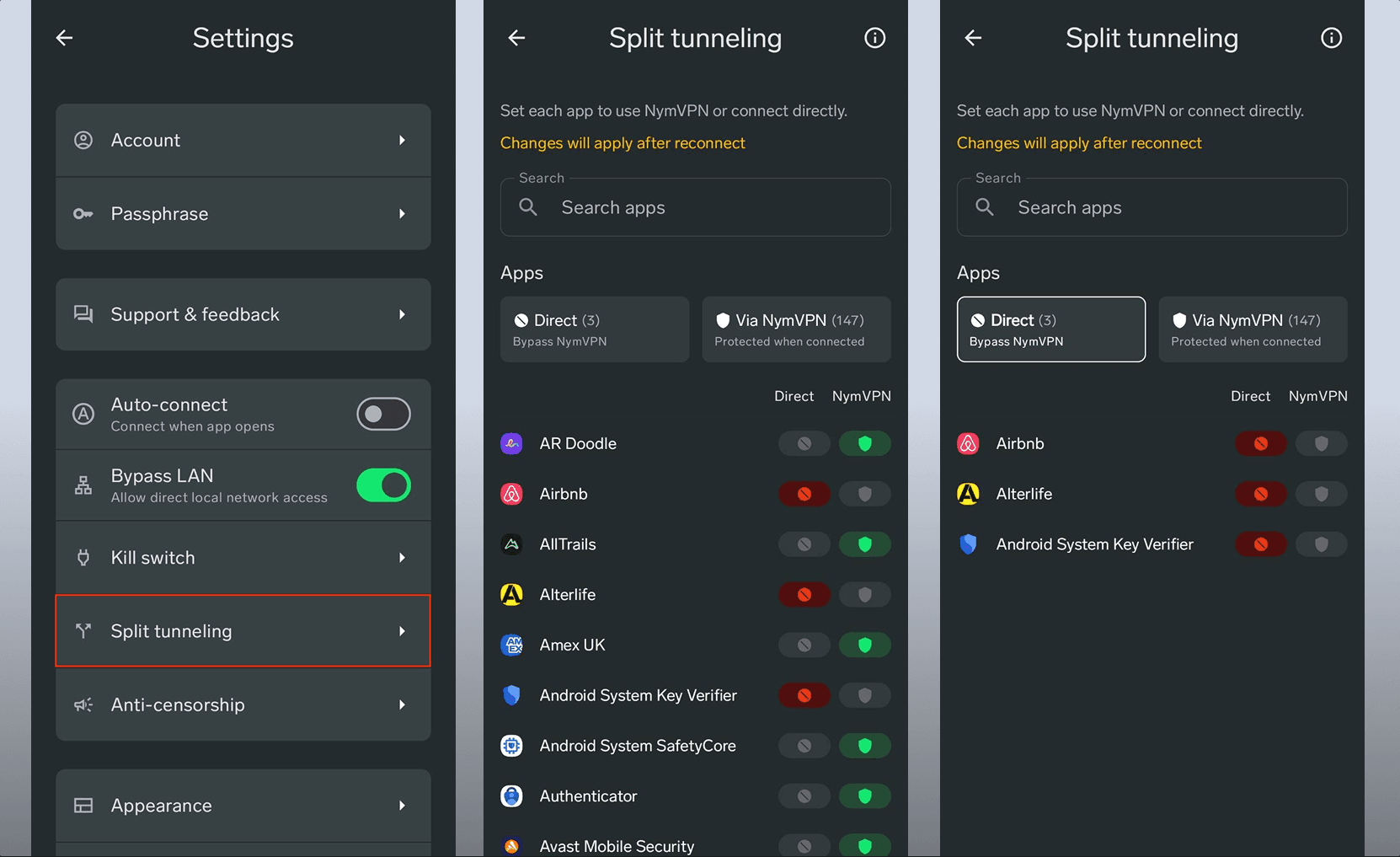
NymVPN, uygulamanızda iki mod arasında seçim yapma imkânı sunarak bunu daha da ileri taşır: günlük kullanım için Hızlı mod ve hassas aktiviteler için Anonim mod. NymVPN’de bölünmüş tünelleme sayesinde, oyun gibi gecikmeye duyarlı görevler için VPN’i tamamen atlayabilirsiniz.
Bu rehber, bir VPN ile bölünmüş tünelleme hakkında bilmeniz gereken her şeyi, mevcut farklı türleri ve dikkat edilmesi gereken güvenlik ve gizlilik hususlarını adım adım anlatacaktır.
VPN bölünmüş tünelleme nedir ve nasıl çalışır?
Öncelikle: VPN tünelleme nedir?
Ağ tünelleme, Sanal Özel Ağların (VPN) kullanıcıların cihazından VPN sunucusuna verileri güvenli bir şekilde iletmesini sağlayan temel bir güvenlik özelliğidir.
İnternet trafiğini yeniden yönlendirmek için VPN, önce kullanıcı cihazında verileri şifreler, ardından bunları her kullanıcıya özel VPN tüneli üzerinden kendi sunucusuna taşır. Bu noktada IP adresi VPN’in kendi IP adresiyle değiştirilir. Şifreleme ve tünelleme, iletim sırasında dış gözetimi ve müdahaleyi engeller: veriler dışarıdan bakanlar için pratikte okunamaz hale gelir.
VPN etkinleştirildiğinde, tüm çevrimiçi etkinlik varsayılan olarak aynı ağ tüneli ve sunucu üzerinden yönlendirilir. Bu tam tünelleme (full tunneling) olarak adlandırılır.
VPN nedir?
An error occurred processing the markdown

Nym’in değerlendirmesi: Bölünmüş tünelleme düzgün ve doğru bir şekilde uygulanmış.
Eğer soru yalnızca bölünmüş tünelleme'nin teknik işleyişi açısından ele alınırsa, cevap hayırdır; bu mekanizma geleneksel VPN’lerde de merkeziyetsiz VPN’lerde de aynı şekilde çalışır. Bölünmüş tünelleme, tam tünellemenin seçici bir versiyonudur: kullanıcı bilinçli olarak bazı trafiği VPN dışına çıkararak güvenlik katmanlarına istisna tanır. VPN üzerinden geçmeyen trafik ise potansiyel olarak gözetim, trafik analizi ve aktivitelerin kullanıcıyla ilişkilendirilmesi gibi risklere açık hale gelir.
Gerçek gizlilik, VPN ağının temel mimarisi tarafından belirlenir. Tek atlamalı merkezi sunucular, çoklu atlamalı merkeziyetsiz VPN’lere göre daha hızlıdır; ancak bunun karşılığında veri ihlallerine, siber saldırılara ve kullanıcı kayıtları için devlet baskısına daha açık bir ağ yapısı ortaya çıkar.
Kendi gizlilik seviyeni kendin seç
Bölünmüş tünelleme, tamamen kullanıcı tercihine dayanır ve hangi trafiğin VPN üzerinden geçeceğini seçmeyi sağlar. NymVPN, kullanıcılara Hızlı mod ile yeni Anonim mod arasında seçim yapma imkânı sunar. Bölünmüş tünelleme sayesinde kullanıcılar; hassas verilerini Anonim moda, günlük trafiğini Hızlı moda, gecikmeye duyarlı işlemlerini ise doğrudan internet servis sağlayıcısı üzerinden yönlendirebilir. Böylece performanstan ödün vermeden anonimlikten de vazgeçmiş olmaz.
VPN bölünmüş tünelleme, kullanıcılara hangi trafiğin korunacağını kontrol etme imkânı verir; ancak bu korumanın kalitesi, VPN’in temel mimarisine bağlıdır. Esneklik ile gerçek gizliliğe aynı anda ihtiyaç duyan kullanıcılar için NymVPN, hem gizlilik korumaları hem de hız üzerinde kontrol imkânı sunar.
VPN bölünmüş tünelleme: SSS
Evet, eğer bölünmüş trafik VPN’i atlıyorsa, DNS sorguları veya IP sızıntısı meydana gelebilir. Güvenli bir bölünmüş tünelleme uygulaması, DNS tünellemeyi zorunlu kılar ve belirli uygulamaları izole ederken kritik trafiğin şifreli kalmasını sağlar.
NymVPN gibi mixnet VPN’lerde, seçici bölünmüş tünelleme yapılandırılarak yalnızca gecikmeye duyarlı trafik mixnet’i atlayabilir; hassas tarama trafiği ise daha az sıçramaya sahip alternatif merkeziyetsiz bir ağ üzerinden yönlendirilir. Bu, hassas görevler için hız ile gelişmiş gizlilik korumaları arasında bir denge sağlar.
Ters bölünmüş tünelleme, belirli istisnalar hariç tüm trafiği VPN üzerinden yönlendirir; bu da çoğu trafiğin korunmasının gerektiği ve yalnızca güvenilir uygulama veya hedeflerin hariç tutulduğu, güvenlik öncelikli kullanım senaryoları için idealdir.
NymVPN gibi gizlilik odaklı gelişmiş VPN istemcileri, uygulama düzeyinde loglar veya her uygulamanın bölünmüş tünelleme yönlendirmesini gösteren görsel paneller içerir ve güvenli olmayan trafiğin tünel dışına yönlendirilmesi durumunda uyarı verir.
Bölünmüş tünelleme, VPN üzerinden şirket içi yerel ağ (LAN) kaynaklarına erişim sağlarken, normal internet trafiğinin VPN’i kullanmadan doğrudan çıkmasına izin verir. Bu sayede hem güvenli iş iletişimi korunur hem de farklı ülkelerdeki servisler daha kolay kullanılabilir.
Yazarlar hakkında
Casey Ford, PhD
İletişim SorumlusuAnia M. Piotrowska, PhD
Teknik inceleyiciİçindekiler
Okumaya devam edin...

Nym bir VPN’den fazlası
Gürültü üreten mixnet sayesinde sizi yapay zekâ gözetiminden koruyan ilk uygulama
NymVPN’in Anonim modunun en iyi gizliliği sağlamasının nedeni
Teknolojik olarak geliştirilmiş VPN gizliliğinin değerini takdir etmek
NymVPN nedir? Bilmeniz gereken her şey
Dünyanın en gizli Sanal Özel Ağı (VPN): Kapsamlı rehberiniz

WireGuard VPN nedir ve nasıl çalışır?
Mevcut en hızlı VPN şifreleme protokolü nasıl çalışır?