
安全访问暗网
如何将 VPN 和 Tor 结合起来以实现隐私保护

分享
暗网经常会和非法活动关联起来,但也是具有隐私意识的普通用户、研究人员、记者和吹哨人活动的空间。 然而,在没有充分的准备和采取必要的保护措施的前提下访问暗网依然有可能使您处于风险之中。 如果您正在考虑探索暗网,请采取必要的步骤保护您的在线隐私和安全。
在本指南中,我们将解释什么是暗网*,如何安全地访问它以及为什么将 VPN (虚拟私人网络) 与 Tor 结合起来使用** 对匿名保护至关重要。
暗网当然并不是为每个人设计的。 在没有适当保护的情况下进入它使你有可能受到监视、跟踪和潜在的安全风险。 如果您需要访问暗网, NymVPN 可以为您的隐私和匿名添加一层额外的保护, 在您访问洋葱网络之前就加密您的连接。

什么是暗网?
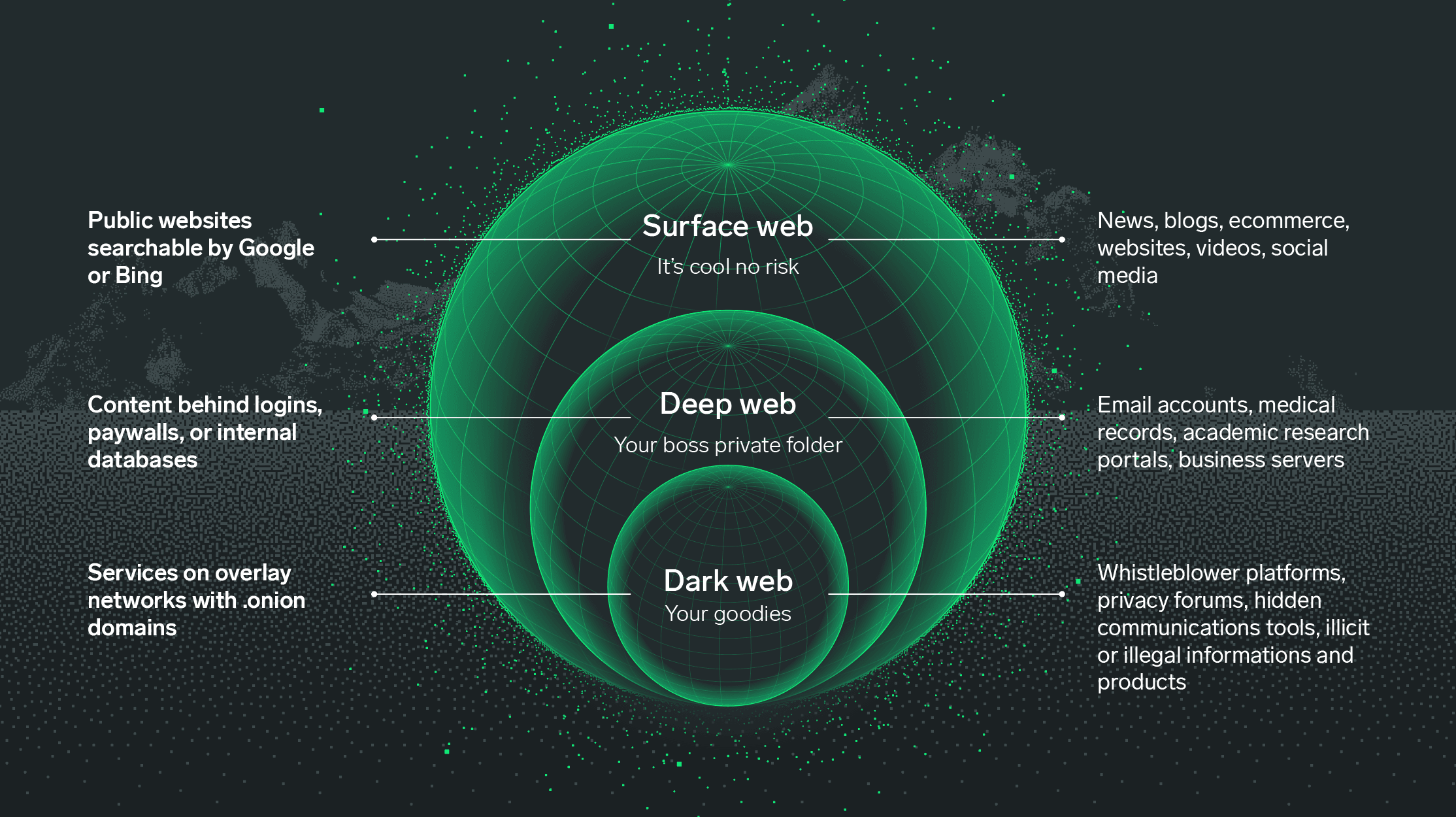
暗网是指无法被诸如谷歌和必应等传统搜索引擎索引的网站。 这些网站运行在匿名网络之上,需要专门的软件才能访问。 最著名的暗网是**Tor 网络**,该网络通过多个节点来加密和路由流量,以实现用户身份的匿名化。 Tor 浏览器是 Tor 项目的唯一官方应用,它允许用户在暗网上访问 .onion 域名的网站。
要了解如何做到这一点,我们首先需要了解互联网是如何被划分的, 还要知道到不是所有内容都是可以从搜索引擎公开获取的。
暗网是否非法?
不,访问黑暗网络在大多数国家不是非法 。 然而,暗网上的一些活动—例如非法市场或黑市论坛—可能在许多管辖区内视为违反法律。 很重要的一点是许多用户出于合法的目的和以隐私为中心的原因访问暗网。 例如避免监视,安全通讯,或者以匿名身份进行研究。
鉴于访问暗网潜在的危险,必须采取安全防范措施。
如何安全地访问暗网
进入黑暗的网络有各种风险,包括但不限于恶意软件、诈骗和监视。 按照这些步骤保持安全和匿名:
1. 连接 Tor 之前先连接到 VPN
先打开并连接到**VPN (虚拟私人网络)可以确保在您访问Tor 网络之前就事先加密您的网络流量并隐藏您的 IP 地址。 这个额外的安全保护确保您的 ISP 和潜在的攻击者无法看到您正在使用 Tor 这一事实。 该操作叫做Onion-over VPN (或VPN-over-Onion)**。
一些给暗网用户推荐的VPN:
- NymVPN: 从设计上确保无日志记录、去中心化、元数据保护和匿名付款
- ProtonVPN - 提供 Tor over VPN 功能和开源(但不是去中心化 VPN )
- NordVPN - 提供专门的 Onion over VPN 服务器(但不是去中心化 VPN )
2. 下载并安装Tor 浏览器
Tor Browser 是专为访问.onion网站而设计的。 您的流量会被多个中间节点路由从而实现匿名化处理。
- 访问 Tor 项目官方网站
- 下载对应的操作系统版本并安装 Tor Browser
- 打开浏览器并连接到 Tor 网络
3. 避免从暗网下载文件或者点击可疑链接
- 不要从不信任的 .onion 站点下载文件,因为它们可能含有恶意软件
- 谨慎防范钓鱼网站和假冒黑市
- 使用一个以隐私为中心的搜索引擎,如Tor版本的DuckDuckGo
4. 禁用 JavaScript 并使用隐私保护工具
- **在 Tor 浏览器设置中禁用 JavaScript ** 以减少可识别的浏览器指纹
- 使用Tails OS (一个基于隐私设计的实时操作系统)来实现更进一步的安全保护
- 物理挡住您的摄像头和麦克风以防止未经授权的访问
5. 从不使用个人登录凭据或真实信息
黑暗的网络充满了隐私风险。 避免登录与您真实身份相关联的账号。 相反,使用一次性的电子邮件服务和端到端加密的通信工具,例如ProtonMail 或 Signal。
你可以在暗网上找到什么?
暗网上有各种合法和非法内容。 出于各种合法的正当理由运营的一些常见网站:
以隐私为中心的平台
- SecureDrop :举报者用来匿名提交信息的工具
- OnionShare:安全的文件共享服务
- 各种暗网搜索引擎: 诸如 Ahmia 等暗网搜索引擎索引非恶意.onion网站
市场和论坛
- 合法的 暗网交易市场 销售以隐私为中心的工具、书籍和数字产品
- 地下论坛会讨论网络安全、黑客和加密货币
为公民和吹哨人提供言论自由的平台
- 记者和活动家 利用暗网绕过压迫性政权的新闻审查制度
- 诸如 The Intercept 运营的 SecureDrop 等平台允许记者和活动家匿名发布文档
暗网危险的一面
黑暗的网络虽然有合法的用途,但也充斥着各种风险:
- 各种诈骗网站:假冒市场和钓鱼诈骗是非常常见的
- 恶意软件和赎金勒索:恶意链接或者下载可疑文件会感染您的设备
- 监视和执法机构追踪:一些暗网网站受到政府当局的监控
如何在暗网保持匿名
如果您想在使用暗网时保持匿名,请遵循以下做法:
- 打开 Tor 之前总是使用去中心化 VPN
- 从不输入真实信息或登录凭据
- 禁用JavaScript并且警惕未知链接
- 使用加密货币交易而不是信用卡,并考虑诸如 Monero 或 Zcash (ZEC) 等隐私币以提高安全性
- 在断开连接之前关闭 Tor 浏览器以安全退出暗网
什么是 VPN?
总结
暗网是互联网上最隐秘的角落,它需要像 Tor 这样的特定工具来进行访问。 虽然它提供了更好的隐私和匿名保护,但也引入了新的风险。 为保安全,请确保始终使用诸如 NymVPN 这样的 VPN 应用程序、禁用追踪功能并始终采取最佳的安全原则。
访问暗网:常见问题
不,访问暗网在大多数国家都是合法的 。 然而,在暗网从事非法活动是违法的。
是的,如果您不使用 VPN,您的网络运营商可以看到您正在连接 Tor 网络这一事实。 VPN 帮助保护您和您的身份。
- 深网 包括私人数据库、学术记录和未被搜索引擎编入索引的电子邮件。
- 暗网 是深网的一小部分,需要 Tor 进行访问并提供更强的匿名性。
VPN 在连接到 Tor 网络之前加密您的流量,防止您的网络运营商看到您正在使用 Tor。 这增加了额外的安全性和匿名保护。
- Tor 浏览器:安全访问 .onion 站点
- VPN:隐藏您的 IP 地址并加密流量
- Tails OS:匿名操作系统
- 加密电子邮件服务:例如 ProtonMail
- 端到端加密通信:例如 Signal
要想安全浏览暗网,只使用 Tor 还远远不够,您的网络运营商依然可以看到您在访问暗网这一事实。 通过 NymVPN,您可以获得真正的匿名性,阻止网络运营商和各种实体跟踪您的活动,隐藏您的在线身份。