¿Qué es un túnel VPN? Cómo las conexiones cifradas protegen tu privacidad
Proteja su contenido digital y sus comunicaciones con túneles VPN

Compartir
Un túnel VPN es una conexión cifrada entre su dispositivo y un servidor VPN, que garantiza que sus actividades en línea sean privadas y seguras. Al redirigir su tráfico de Internet a través de este túnel seguro, las VPN protegen sus datos de miradas indiscretas, incluidos hackers, proveedores de servicios de Internet y organismos de vigilancia.
¿Cómo funciona el túnel de una VPN?
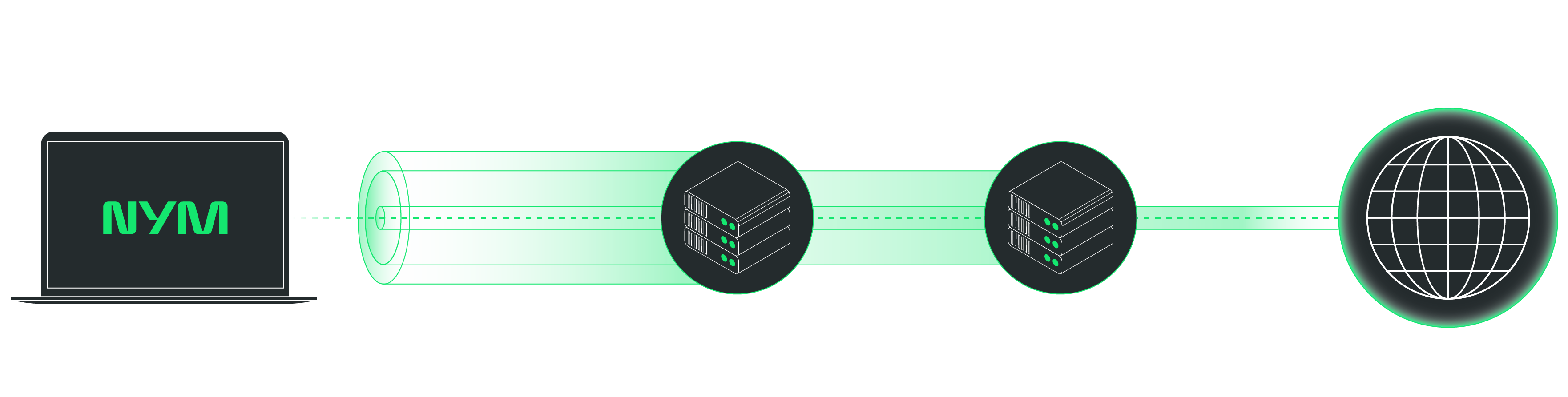
Cuando te conectas a una VPN, se crea un túnel seguro entre tu dispositivo y el servidor VPN. Este proceso implica cifrar sus datos, lo que los hace ilegibles para cualquiera que pueda interceptarlos. Los datos cifrados viajan a través del túnel hasta el servidor VPN, que a su vez los reenvía a su destino final en Internet.
Este mecanismo oculta su dirección IP y garantiza que sus actividades en línea estén protegidas frente a la vigilancia externa. Gracias al cifrado de extremo a extremo, ningún tercero puede leer la información que pasa por el túnel entre su dispositivo y el servidor VPN.
¿Qué es una VPN?
La mayoría de los túneles VPN pasan por un único servidor
Nym se enruta a través de múltiples servidores, por lo que nadie puede rastrearte.

Túnel VPN: preguntas frecuentes
Un túnel VPN cifra todo su tráfico de Internet y lo redirige a través de un servidor seguro, lo que garantiza la privacidad y la seguridad. Un proxy, por su parte, solo redirige tráfico específico (como un navegador web) y no cifra necesariamente los datos, por lo que ofrece una protección menos completa. Descubre todo sobre la diferencia entre VPN y proxies con la guía de Nym.
Aunque las VPN se centran principalmente en la seguridad y la privacidad, en algunos casos pueden mejorar la velocidad al eludir las restricciones de los proveedores de servicios de Internet. Sin embargo, debido al proceso de cifrado, es habitual que se produzca una ligera disminución de la velocidad.
En la mayoría de los países, el uso de una VPN es legal. Sin embargo, algunos países tienen restricciones o prohibiciones sobre el uso de VPN. Es fundamental consultar la legislación local antes de utilizar una VPN.
Las VPN cifran sus datos y protegen su privacidad, pero no están diseñadas para detectar ni bloquear malware. Para una protección completa, utiliza un programa antivirus junto con tu VPN.
La mayoría de los proveedores de VPN ofrecen aplicaciones para diversos dispositivos, como ordenadores, smartphones y tabletas. Algunos incluso son compatibles con routers, lo que le permite proteger todos los dispositivos conectados a su red doméstica.
Sobre los autores
Casey Ford, PhD
Lider de comunicacionesTabla de contenidos
Seguir leyendo...
¿Qué es el cifrado? Una guía completa
Explicar la tecnología detrás de la seguridad de los datos en línea y sus límites para la privacidad
Presentamos AmneziaWG para NymVPN
Cómo funciona la resistencia a la censura con el modo rápido de NymVPN
¿Qué es la VPN WireGuard y cómo funciona?
Cómo funciona el protocolo de cifrado VPN más rápido del mercado