
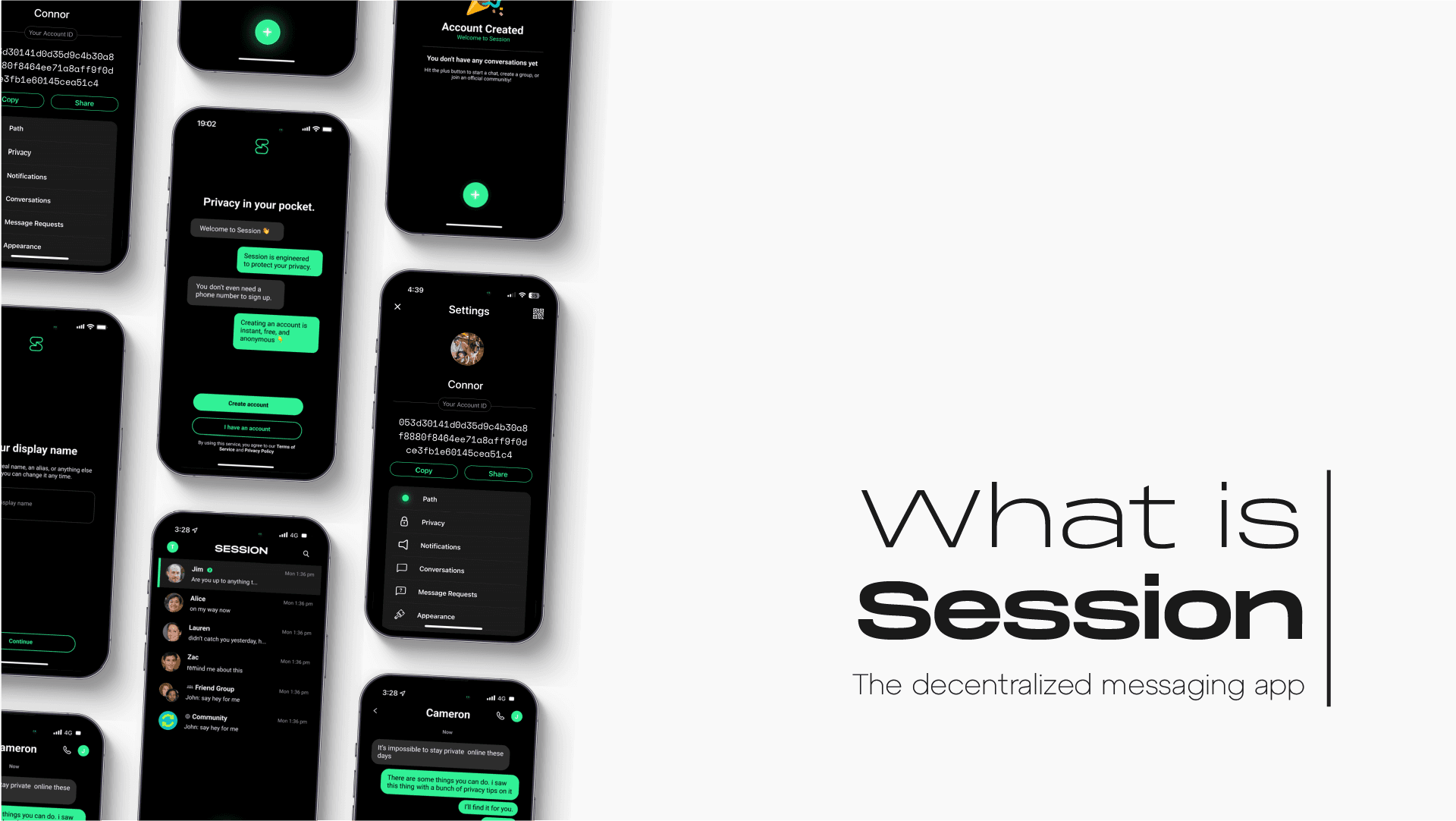
Session Messenger چیست؟
پیامرسان غیرمتمرکزی که برای محافظت از متادیتای شما در جایی که دیگران قادر به آن نیستند طراحی شده است

اشتراکگذاری
We now live in a time when perhaps the majority of our conversations, from the trivial to the deeply personal, takes place through a messaging app. It’s crucial that we know what is being recorded about us: not just what we say, but who we say it to, when, where, and how often. This is called metadata, and almost no messaging app protects this information.
وارد Session Messenger شوید: یک پلتفرم پیامرسان خصوصی و با حداقلسازی متادیتا که به شما امکان میدهد **پیام ارسال کنید، نه متادیتا.**این برنامه فقط متنهای شما را رمزگذاری نمیکند: بلکه طوری طراحی شده است که از ایجاد خرده نانهای دیجیتالی که امکان نظارت فراگیر را فراهم میکنند، جلوگیری کند.
Nym’s cybersecurity team is here to unpack exactly what Session is, how it handles metadata differently than competitors, and why it is worthy of becoming a crucial tool in your digital privacy toolkit.
Behind encryption’s veil: Metadata risks explained
To understand what makes Session unique, we first need to talk about metadata: the often invisible but deeply revealing data trail that accompanies every digital conversation and interaction.
فراداده چیست؟
In the context of messaging, metadata is all the auxiliary data surrounding a message:
- Who sent it (and to whom)
- When
- From what IP address or approximate location
- How frequently communications occur
- Message size
- Device identifiers
Think of metadata as the map to your conversations: even if the message content is hidden, the paths you take (who you talk to, how often, when) can be extremely sensitive. Unfortunately, it is being systematically collected under all our noses.
And even when messages are end-to-end encrypted, this metadata map of your life remains exposed.

Why popular messengers fail at metadata protection
Many popular messaging apps advertise things like encryption as a privacy feature, which is true if properly implemented with open source code. But this is an illusion of security when it comes to surveillance powered by artificial intelligence (AI).
WhatsApp, Telegram, and others
Many mainstream encrypted messengers protect the content of your communications, but they still can collect or harvest metadata. Their centralized servers can correlate sender and recipient, log timestamps, and record connection details (e.g. your IP addresses). Because the service operator controls the routing infrastructure, queries or legal demands can reveal who is messaging whom and when.
Read more from Nym on the privacy risks of major apps like WhatsApp and Telegram.
Signal
Signal is rightly held up as the gold standard in secure messaging because of its strong end-to-end encryption, no logging practices, and commitment to digital privacy. However, Signal must still interact with a centralized server to route messages, and some minimal metadata (e.g., who you contact, when you last connected) may remain visible to the service infrastructure (or inferred via connection patterns). While Signal does minimize what data it stores, it cannot completely eliminate the metadata traces of connections.
In short, end-to-end encryption alone doesn’t stop metadata surveillance. If the routing infrastructure is centralized or logs connection events, adversaries can exploit patterns even without seeing the content of your messages.
The real-world consequences of metadata
For ordinary users, activists, journalists, or dissidents, metadata exposure can be dangerous:
- Targeted profiling: Governments or corporations can build detailed social graphs of who you chat with, when, and how often.
- Chilling effects: Knowing that your communication network is under observation deters dissent, journalism, or activism.
- De-anonymization: Adversaries can correlate metadata with other data sources (e.g., network logs and public records) to trace pseudonymous accounts back to real identities.
- Temporal analysis: Even intermittent patterns (late-night messaging, certain rhythms) leak information about behavior or affiliations.
If your app hides the content but betrays your patterns of communications, you remain exposed. That is the key privacy gap Session intends to bridge.
Session’s routing architecture
To prevent metadata leakage, Session designs its entire routing structure around anonymity from the network layer up. This happens through a combination of onion requests, “Swarms,” decentralized nodes.
Let’s break down how it works, and how it differs from conventional routing used by WhatsApp, Telegram, and Signal.
How Session routes your messages
Anonymous account IDs
Session doesn’t use phone numbers or email addresses for signups. Instead, it generates a pseudonymous public/private key pair and uses a 66-character alphanumeric Session ID as your identifier. Because no real identifier is linked, there’s no directory that maps real users to account IDs.
Service nodes & Swarms
Session runs on top of the Oxen Service Node Network. These nodes form the decentralized network that transports messages and offers temporary storage.
Messages destined for an offline user are buffered in a small group of nodes called a Swarm which store encrypted payloads until the recipient fetches them. Importantly, no single node holds full knowledge of who is talking to whom.
Onion routing (“Onion Requests”)
Like Tor’s model, when you send a message on Session, it is wrapped in multiple layers of encryption (like an onion) and passed through three service nodes. Each node peels away one layer, only knowing the immediately previous and subsequent hop.
No single node ever learns both the origin and destination of the message. Even when the recipient later fetches the message via onion routing from their Swarm, the linkage is obscured in both directions.
No central logging, no connection metadata
Session’s design deliberately avoids requiring central servers that log metadata. There is no central database of message graphs, and nodes only store the minimal necessary for routing and ephemeral buffering.
Unlike traditional messaging apps, Session’s network design seeks to distribute trust and fragment metadata so that no adversary can reassemble the full picture of a communication channel. As AI technology accelerates, these kinds of decentralized protections are critical.
ویژگیهای حفظکننده حریم خصوصی در Session
در اینجا بعضی از ویژگیهای کلیدی حریم خصوصی در Session و نحوه کمک هر یک برای محافظت در برابر نظارت و افشای متادیتا آورده شده است.
این قابلیتها در کنار هم با هدف کاهش سطح دادهای که مهاجمان میتوانند از آن سوءاستفاده کنند طراحی شدهاند. As the Session describes in their whitepaper, the system’s goal is “minimal metadata leakage, or metadata minimalism.
Of course, no system is perfect. For example, push notifications (via FCM or APNs) may require exposing some minimal identifiers (though via onion requests) to enable timely alerts. And peer-to-peer calls currently expose IPs to the calling party. Session’s docs openly note these trade-offs.
Why Session matters
In the evolving landscape of data surveillance, encrypting content is the bare minimum we should expect. The real frontier is metadata: the scaffolding that supports everything from broad profiling to pinpoint targeting. Much like NymVPN, Session is designed to make metadata collection expensive, noisy, and unreliable.
For ordinary users, that means a messenger where your relationships and connection rhythms aren’t quietly logged and archived. For activists, journalists, or organizers in repressive regions, Session can serve as an anti-surveillance tool, blunting adversaries’ ability to deanonymize networks or apply inferential analytics.
Nym’s mission is to restore privacy at the network layer — to disconnect identity from communication metadata. We think Session is an outstanding comrade in that quest for making the internet private by default.

Session Messenger چیست؟ FAQs
Session routes messages through an onion-style network without requiring phone numbers, emails, or central servers. This design prevents identity linkage and metadata collection, making it a strong choice for private communication.
Unlike Signal or Telegram, Session doesn’t rely on centralized infrastructure or contact syncing. It’s built for anonymity — no SIM card, no servers holding user data, and no IP logs. Each conversation is encrypted and unlinkable to your real identity.
بله. Combining Session with a privacy-focused VPN like NymVPN adds another layer of protection by masking your IP address, blocking network-level surveillance, and preventing traffic correlation attacks.
Session is designed for anonymity, but no app can guarantee absolute invisibility.
درباره نویسندگان
کیسی فورد، دکترا
سرپرست ارتباطاتفهرست مطالب
خواندن را ادامه دهید...
منظور از برنامههای غیرمتمرکز (DAppها) چیست؟ ابزارهای بنیادین Web3
شناخت قدرت برنامههای غیرمتمرکز و اینکه چرا حریم خصوصی باید در اولویت قرار گیرد
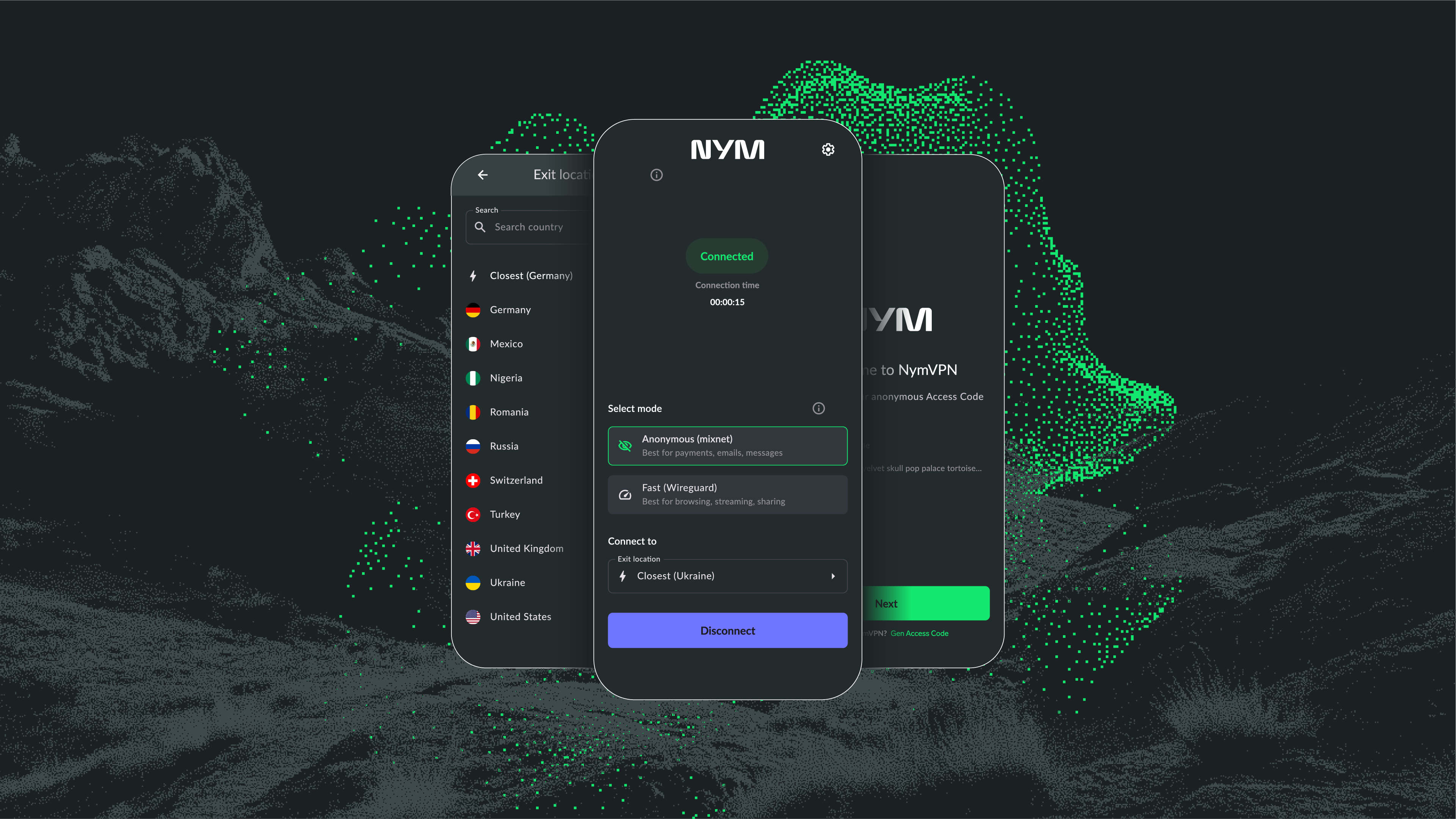
NymVPN چه چیزی است؟ Everything you need to know
راهنمایی برای خصوصیترین شبکه خصوصی مجازی جهان