

NymVPN için post-kuantum anahtarların tanıtımı
Lewes Protokolü üzerinden post-kuantum anahtar değişimi, Nym’in post-kuantum güvenlik yol haritasının ilk aşamasında artık aktif durumda


Paylaş
Bugün internet trafiğinin büyük bir kısmını koruyan şifreleme sonunda kırılacaktır. Bu yıl değil ve belki önümüzdeki on yılda da değil. Ancak kuantum bilgisayarlar yeterli ölçeğe ulaştığında, bugün kullanılan çoğu şifrelemeyi ayakta tutan matematiksel varsayımlar çökecektir. Daha önce şifrelenmiş trafiğinizi kaydeden herkes, onu daha sonra çözmeye başlayabilir.
Bu, akademik makalelerdeki teorik bir senaryo değil. Bu, iyi kaynaklara sahip saldırganların halihazırda dikkate aldığı aktif bir tehdit modelidir. 1 2
NymVPN v2026.7 ile Nym, buna karşı savunma konusunda ilk somut adımı atıyor. Nym’in post-kuantum güvenlik yol haritasının ilk aşamasında, Nym tarafından geliştirilen ve NymVPN’in ötesinde de genel amaçlı gizlilik korumaları sağlayan yeni bir protokol olan Lewes Protokolü üzerinden Hızlı modda tüm platformlarda test amaçlı post-kuantum anahtar değişimi artık aktif durumda.
Not: Lewes Protokolü özelliği şu anda isteğe bağlıdır ve manuel olarak etkinleştirilmelidir. Kısa bir üretim döneminin ardından, varsayılan anahtar değişim protokolü haline gelecektir.
Bu ne anlama geliyor, zamanlaması neden önemli ve bundan sonra nereye gittiğimiz aşağıda açıklanıyor.
NymVPN’de post-kuantum anahtarlar
Nym’in yeni post-kuantum anahtar değişimi, Lewes Protokolü adını verdiğimiz yeni bir protokolün parçasıdır. Bu isim, Nym’in çekirdek geliştiricilerinin bir araya gelerek Nym’i uygulama düzeyindeki korumalardan çıkarıp gizli iletişimler için genel amaçlı bir protokole dönüştürme vizyonunu belirledikleri İngiltere’nin Lewes kasabasından gelmektedir.
Lewes Protokolü, NymVPN’in Hızlı modu tarafından kullanılan WireGuard gibi anahtar değişim mekanizmalarına önceden paylaşılan simetrik bir sırrı entegre eden, Noise tabanlı bir Post-Kuantum Önceden Paylaşımlı Anahtar (PSQ) protokolleri ailesinin bir parçasıdır. Bu, NymVPN bağlantınızın en erken aşamasına post-kuantum güvenlik ekler.
Anahtar değişimi, bir VPN oturumunun başladığı noktadır. Herhangi bir trafiğiniz tünelden geçmeden önce, cihazınız ve ağın ortak kriptografik anahtarlar üzerinde anlaşması gerekir. Bu el sıkışma (handshake), her şeyin üzerine inşa edildiği temeldir. Eğer bu el sıkışma zayıfsa, geri kalan şifreleme ne kadar güçlü olursa olsun fark etmez. Post-kuantum anahtarlar, bu el sıkışmayı kuantum saldırılarına karşı güçlendirir.
Ancak Lewes Protokolü'nü özel kılan tek şey bu değil. Post-kuantum algoritmalar tarihsel olarak performans maliyetleriyle birlikte gelir. Bu yüzden NymVPN'i pratik bir kısıtlama ile tasarladık: Hızlı olmak zorunda. Lewes Protokol, önceki post-kuantum yaklaşımlara kıyasla bağlantı başlatma süresini azaltmak için oluşturulmuştur. Bu sadece kuantum güvenli bir bağlantı değil, aynı zamanda daha optimize edilmiş bir başlatma anlamına gelir.
NymVPN'de post-kuantum anahtarların kullanımı
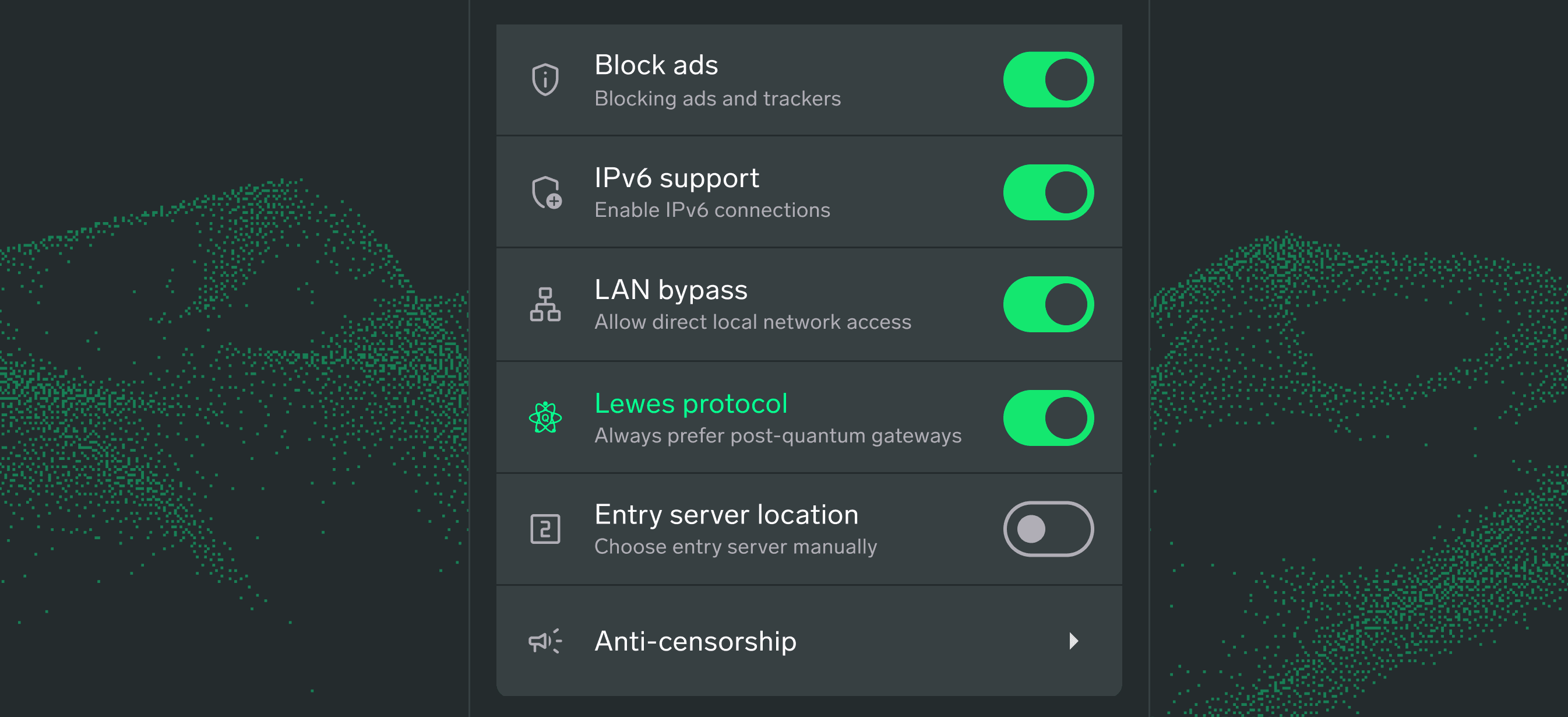
Lewes Protokol, Hızlı mod üzerinde 2 atlamalı merkeziyetsiz yönlendirmenizdeki anahtar değişimini korur. Tüm kullanıcılar için varsayılan olarak etkinleştirilmeden önce, şu an Ayarlar içinde etkinleştirebileceğiniz bir geçiş olarak kullanılabilir.
Deneyin ve Nym geliştiricilerine aradaki fark hakkında ne düşündüğünüzü bildirin.
Şimdi bir adım geriye gidelim ve bunun veri güvenliği için neden önemli olduğunu düşünelim.
Post-kuantum şifreleme nedir?
Modern şifreleme, çözülmesi zor matematiksel problemlere dayanır. RSA, çok büyük sayıların çarpanlara ayrılmasının neredeyse imkânsız olmasına dayanır. Eliptik Eğri Kriptografisi (ECC) ise ayrık logaritma probleminin zorluğuna ilişkin benzer bir varsayıma dayanır. Bu gibi şifreleme protokolleri VPN tünellerini, bankacılık oturumlarını, mesajlaşma uygulamalarını ve web trafiğinin çoğunu koruyan temel güvenlik mekanizmalarıdır.
Kuantum bilgisayarlar bu varsayımlara klasik bilgisayarlardan farklı şekilde saldırır. Örneğin, yeterince güçlü bir kuantum makinesinde çalıştırılan Shor'un algoritması büyük sayıları polinom zamanda çarpanlarına ayırabilir. Bu ölçekte uygulanabilir hale geldiği anda, RSA ve ECC zor problemler olmaktan çıkar ve çözülebilir problemler haline gelirler. Gerçekte, hala bu ilkellere dayanan her sistem geriye dönük olarak okunabilir hale gelir.
Post-kuantum risk tartışmalarının çoğu, kuantum bilgisayarların ne zaman oraya ulaşacağı sorusuna odaklanmaktadır. Gizlilik açısından bakıldığında bu yanlış bir soru çünkü asıl tehdit donanımın gelmesini beklemek değil. Bu tehdit, halihazırda yirmi yılı aşkın bir süredir devam eden kitlesel gözetim ve veri toplama faaliyetleridir.
"Şimdi topla, sonra çöz" sorunu
Yeterli kaynaklara sahip düşmanların İSS'lerden devlet istihbarat kurumlarına kadar her yerde şifrelenmiş verilerinizden değer toplamaya başlamak için kuantum bilgisayarlara ihtiyacı yoktur. Artık bunu kaydedebilir, saklayabilir ve donanım yeterli seviyeye ulaştığında şifreyi çözebilirler. Siyasi örgütlenme, finansal işlemler, tıbbi kayıtlar veya gazetecilik gibi yıllarca ya da on yıllarca gizli kalması gereken veriler için, ifşa olma riski zaten başlamış durumda.
Kitlesel ölçekte çalışan gözetim programlarının bu şekilde işlediğini biliyoruz. Ekonomi çok basittir: depolama ucuzdur ve bugün şifrelenmiş trafiğin içeriği, ileride şifreleri çözmek mümkün olduğunda da değerli olmaya devam eder.
Nym’in Gürültü Üreten Mixnet yapısını kurmasının tam nedeni de buydu: sadece teorik gelecekte değil, şu anda da gerçekleşen gözetimden metadata’yı korumak. Post-kuantum şifreleme de aynı mantığın bir uzantısıdır.
NIST zaman çizelgesi
2024 yılında, ABD Ulusal Standartlar ve Teknoloji Enstitüsü (NIST), RSA ve ECC tabanlı sistemler için resmi bir kullanımdan kaldırma takvimi belirledi ve post-kuantum algoritmalara tam geçişin 2035’e kadar zorunlu olacağını açıkladı. Aday algoritmalar arasında anahtar değişimi için CRYSTALS-Kyber (ML-KEM), dijital imzalar için ise CRYSTALS-Dilithium ve FALCON yer almakta ve standartlaştırma için seçilmiştir.
2035 son tarihi kulağa uzak geliyor olabilir. Tüm bir mimari boyunca post-kuantum kriptografi yığını oluşturmak, bunu test etmek ve ölçekli şekilde devreye almak hızlı gerçekleşen bir şey değil. Gerçek kullanıcı trafiğini düşmanca koşullarda yöneten merkeziyetsiz bir VPN için doğru başlangıç zamanı, bu zorunluluk geldiğinde değil; aslında birkaç yıl önceydi. İkinci en iyi zaman ise şimdi.
Nym’in post-kuantum güvenlik yol haritası
Nym’in Baş Bilim Sorumlusu Ania Piotrowska, geçen yıl Nym’in post-kuantum güvenlik yol haritasını açıkladı. Lewes Protokolü, üç aşamadan ilkinin tamamlandığını gösterir; her aşama mimarinin farklı bir katmanını güçlendirir.
1. Aşama: ✅ Post-kuantum anahtar değişimi
Lewes Protokolü artık NymVPN v2026.7 sürümünde tüm platformlarda post-kuantum anahtar değişimini canlı hale getiriyor. Kanal kurulumu için kuantum dirençli anahtar değişimi sayesinde, Lewes Protokolü yalnızca post-kuantum tehditlere karşı güvenliği artırmakla kalmıyor, aynı zamanda bağlantı hızını da önemli ölçüde iyileştiriyor.
2. Aşama: Mix node iletişimleri için post-kuantum koruma
Bir sonraki adım, korumayı mix node'lar arasındaki iletişim kanallarının iç kısmına taşıyor. Bu seviyede post-kuantum anahtar değişiminin uygulanması, ağ üzerinden yönlendirilen mesajların yalnızca giriş noktasında değil, her röle istasyonunda kuantum direnci kazanması anlamına geliyor.
3. Aşama: Sphinx paket formatında post-kuantum koruma
Sphinx mixnet'in çalışmasını sağlayan kriptografik paket formatıdır. Trafiği, her node paketin kaynağı, hedefi veya içeriği hakkında hiçbir bilgi edinmeden soyabileceği katmanlar halinde kapsülleyerek, metadata-gizli mesaj yönlendirmesi sağlar.
Sphinx'i post-kuantum anahtar değişimiyle güçlendirmek, son boşluğu kapatacak ve Nym mixnet merkezinin, klasik gözetim tekniklerine olduğu kadar kuantum kriptanalizine karşı da dirençli olmasını sağlayacaktır. Nym'in post-kuantum mixnet güvenliği planları hakkında daha fazlasını buradan okuyabilirsiniz.
Üç aşama tamamlandığında, post-kuantum koruma NymVPN bağlantısının her katmanında çalışacak: girişteki el sıkışma (handshake), mixnet ve paket yönlendirme sistemi.
Sonuç
Post-kuantum dönemi, sonradan hazırlanılacak bir şey değildir. Post-kuantum dönem, sonradan hazırlanılacak bir dönem değil. Nym’in korumak için tasarlandığı tehdit aktörleri olan kitlesel gözetim programları, istihbarat kurumları ve otoriter hükümetler de beklemiyor; veri topluyor. Lewes Protokolü buna verilecek ilk cevaptır.
Kaynaklar
- NIST İç Raporu: Post-Kuantum Kriptografi Standartlarına Geçiş
- Chen, Moody, Yi-Kai Liu (2022): Post-Kuantum Kriptografi: Ek Dijital İmza Şemaları
Yazarlar hakkında
Casey Ford, PhD
İletişim Sorumlusuİçindekiler
Okumaya devam edin...
Nym’in 2026 yol haritası: Merkeziyetsizliğin gücünü açığa çıkarmak
$NYM tokenini canlandırmak, mixnet’i geliştirmek ve merkeziyetsizliği en üst düzeye çıkarmak
Gizliliği geleceğe hazırlamak: Nym’in post-kuantum güvenliğe giden yol haritası
Geleceğin dünyası için insanların ihtiyaç duyduğu güçlü şifreleme çözümlerini geliştirmek
Merkeziyetsiz VPN ve geleneksel VPN: Aralarındaki fark nedir?
Çoğu VPN vaat ettikleri gizliliği sağlayamaz. İşte merkeziyetsizliğin gerçekte neyi değiştirdiği ve VPN mimarisinin neden önemli olduğu

Nym bir VPN’den fazlası
Gürültü üreten mixnet sayesinde sizi yapay zekâ gözetiminden koruyan ilk uygulama